Zaterdag 17 10 2026 15.00–18.00
Family Album Exhibition Opening and Special Reading by Robert Glück
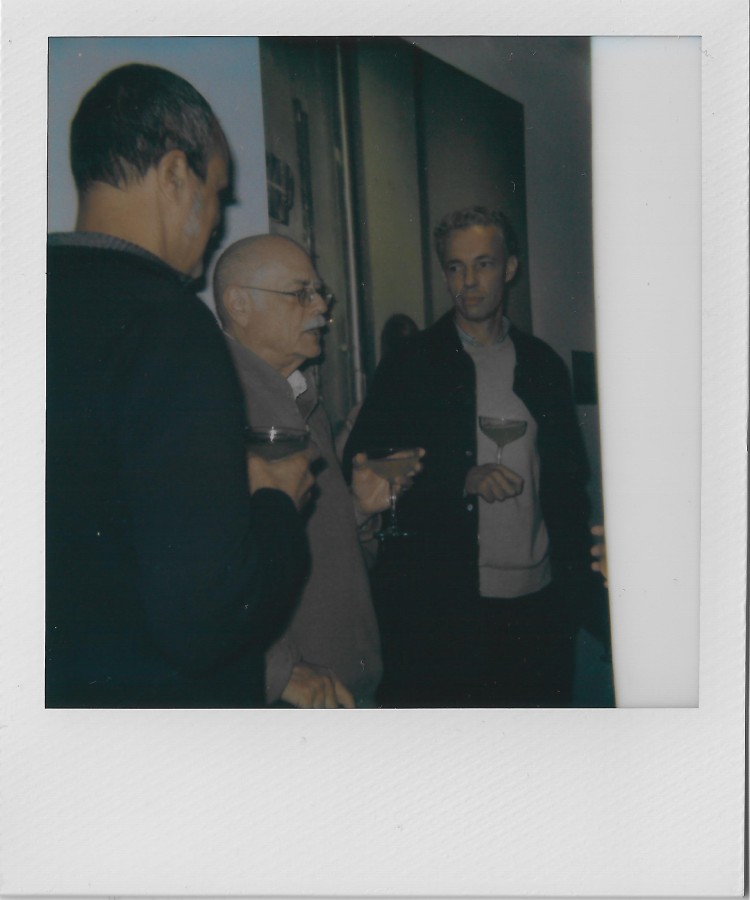
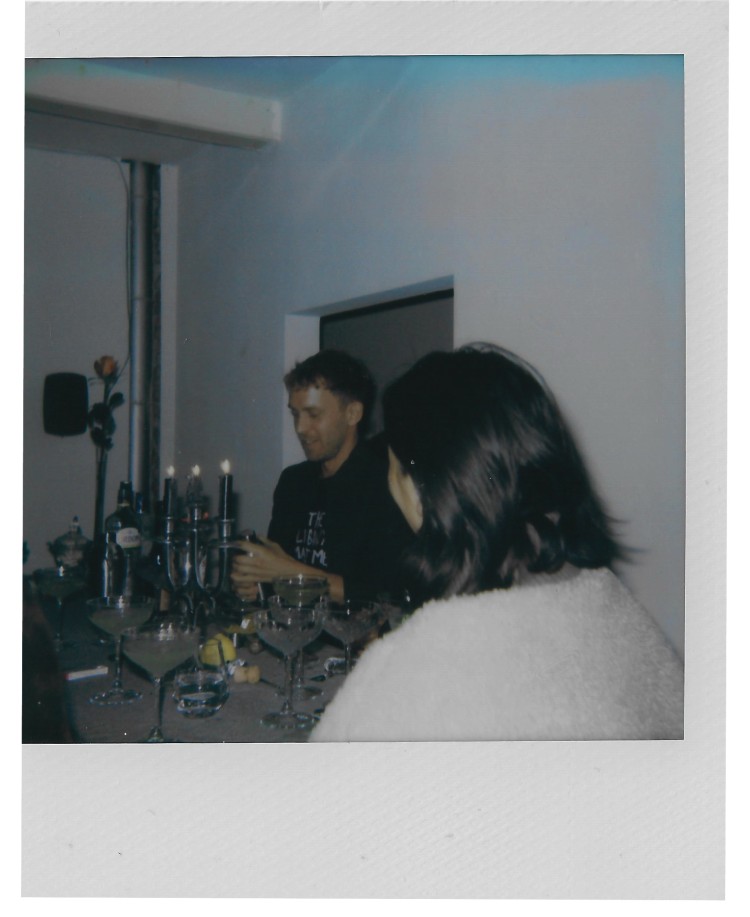
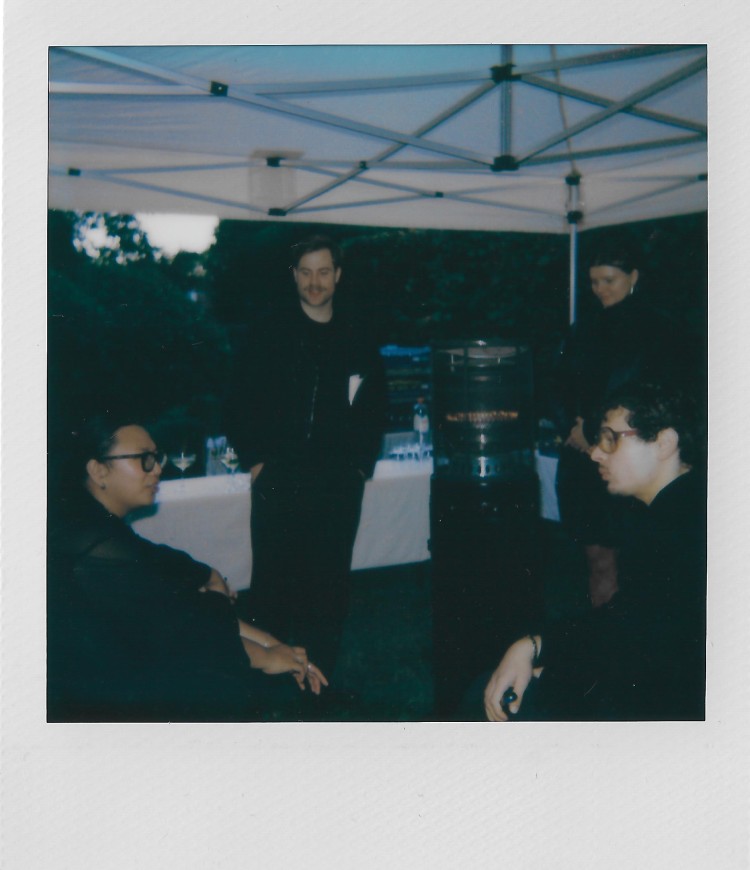
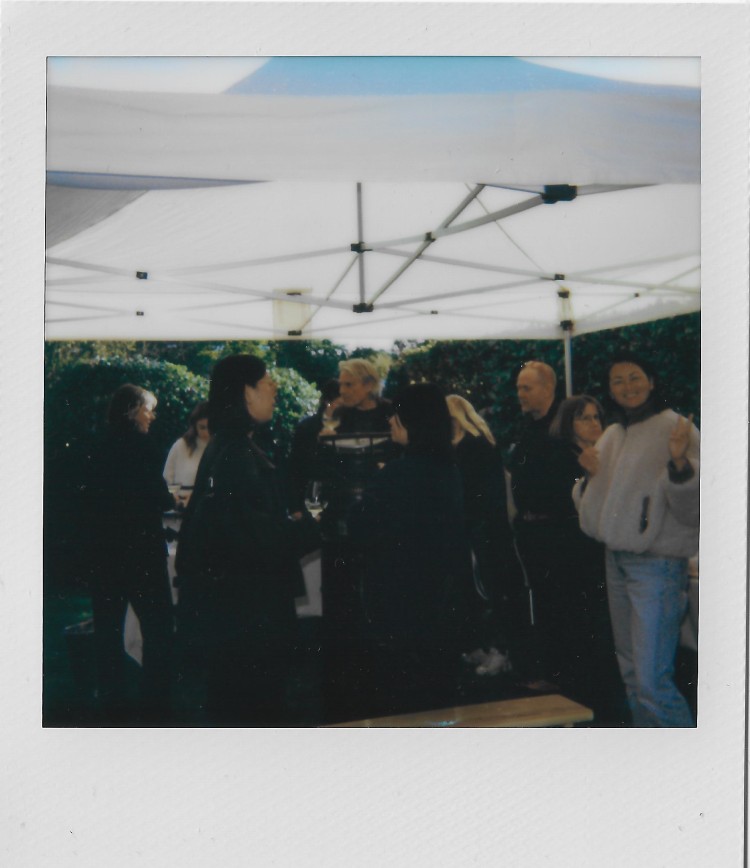
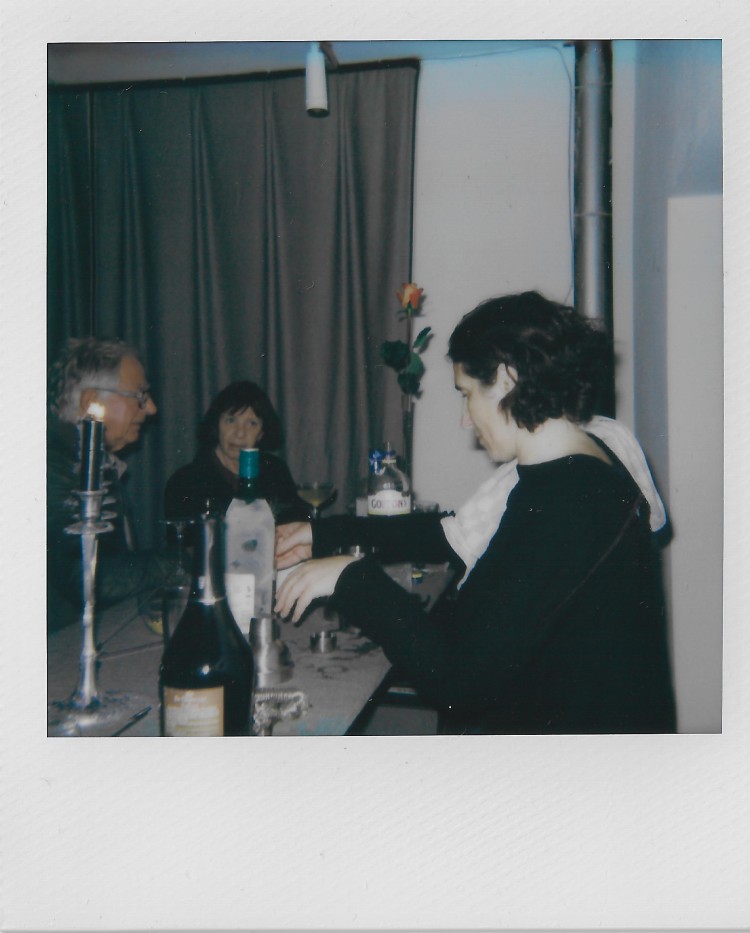
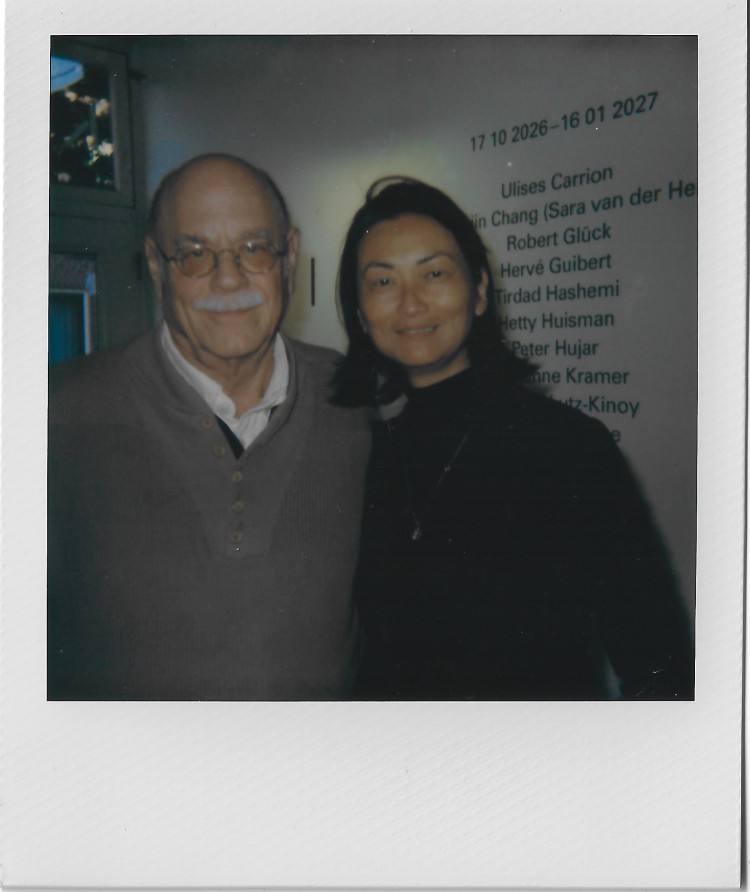
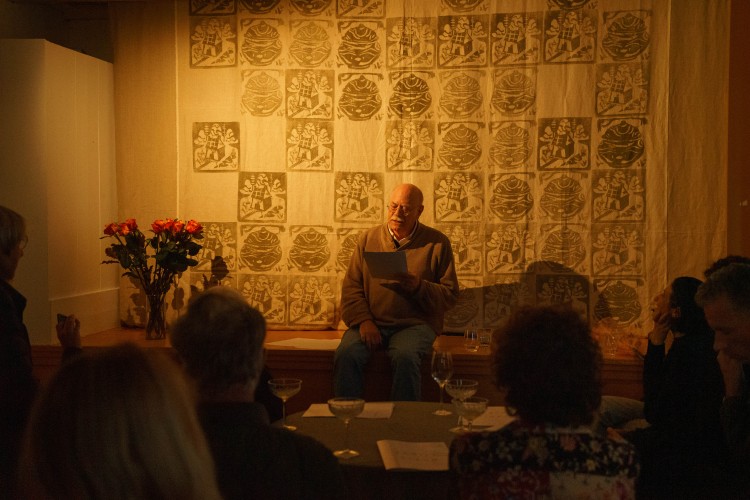
To celebrate the opening of our group exhibition Family Album, poet and artist Robert Glück read excerpts from his book Family Poems, alongside newer commissioned work. At the bar, we served Martinis and French 75s, both chosen by Robert. Throughout the opening, guests took polaroid photos to create Kunsthuis Syb’s own family album, an idea from our intern Emily O’Brien. The album is now on display in the exhibition.
On Saturday the 17th of October, Kunsthuis Syb is pleased to invite you to the opening of Family Album, a group exhibition with historic and recent works by Ulises Carrión, Sara Sejin Chang (Sara van der Heide), Robert Glück, Hervé Guibert, Tirdad Hashemi, Hetty Huisman, Peter Hujar, Bastienne Kramer, Matthew Lutz-Kinoy, Ugo Rondinone, and Mikołaj Sobczak.
Programme
15:00 - Walk-in and celebratory drinks
16:00 - Opening speech
16:30 - Special reading by artist Robert Glück and Frisian translation recital by Janneke Spoelstra
17:00 - De Bult bar activated by Arnisa Zeqo and Titus Nouwens
18:00 - end
Ulises Carrión (1941–89) was a Mexican conceptual artist. Carrión began his career as a writer before expanding his practice beyond traditional writing to focus on the book as its own medium, rather than a container for text. In 1972, Carrión relocated to Amsterdam where he became inspired by the city’s international atmosphere, artistic innovation, and tolerant environment. It was here that Carrión began creating his first artist books, using various techniques and media.
Sara Sejin Chang (Sara van der Heide) (b. 1977) is a Korean-Dutch artist based in Berlin. She works across film, writing, immersive installations, performance, and painting. Chang combines spiritual evocations, historical research and the unravelling of colonial narratives, creating works that act as historical repair, healing and belonging. She questions Eurocentric systems of categorization and racialization embedded in Western society. Her work unfolds as poetic gestures that center spiritual and inclusive approaches to modernity, which seek to transform the meaning of value and time.
Robert Glück (b. 1947) is an American poet, editor, writer, and ceramic artist based in San Francisco. His writing includes the story collections Elements(1982) and
Denny Smith (2003); novels Jack the Modernist(1987), Margery Kempe(1994), and About Ed (2023); and books of poetry La Fontaine(1981), Reader (1989) and I, Boombox (2023), among others. Glück relates the structure of his novels to his ceramic pieces, recognizing them both as spherical, as expressions of emptiness and the fluidity of gender.
Hervé Guibert (1955–91) was a French novelist, photographer, and filmmaker. Guibert wrote more than twenty-five novels and short narratives. He gained widespread public attention for his autobiographical accounts of his battle with AIDS. Guibert’s honesty is reflected in his photographs, which capture a range of subjects, from landscapes to friends, family, and lovers, and occasionally self-portraits. His work is subtle and restrained, allowing viewers to peek into private moments, appearing to be made without a public in mind. Guibert often struggled with the attention he received from being a face of the AIDS crisis in France. He died of AIDS in 1991.
Tirdad Hashemi (b. 1991) is an Iranian artist based in Paris and Berlin. Hashemi works primarily in small-scale drawing and painting, using image-making as a form of communication and a means of expressing what is often difficult to put into words. Their unpolished style reflects the honest and communicative nature of this approach. Hashemi’s work considers their own experiences as well as those of others living in exile, bringing together intimacy and solitude, survival and fragility.
Hetty Huisman (1941–2017) was a Dutch ceramist, sculptor, and conceptual artist who also worked across painting, installation, photography, and video. She studied ceramics in the Department of Industrial Design at the Institute for Applied Arts Education in Amsterdam, graduating cum laude in 1961, and the Staatliche Ingenieurs- und Werkschule für Keramik in Höhr-Grenzhausen and worked in Paris before setting in Amsterdam in 1964. Huisman took a conceptual and deconstructive approach to ceramics, in 1968 she added the term CeragenetiCs to her name to emphasize that her art stems from principles that extend beyond pottery alone involving social participation as a part of her artistic process.
Peter Hujar (1934–87) was an American photographer based in New York City. Working almost exclusively in black and white, Hujar photographed artists, lovers, urban landscapes, and animals, each approached with an attentiveness that emphasized their singularity and individuality. During the 1980s, while New York City was at the forefront of the AIDS crisis, Hujar’s work resonated with his community as he continued to capture themes of
vulnerability, intimacy, and transience. Hujar died of AIDS-related pneumonia in 1987.
Bastienne Kramer (b. 1961) is a Dutch artist based in Amsterdam. She graduated from St. Joost School of Art & Design, Breda, and studied at Rijksakademie voor Beeldenden Kunsten, Amsterdam. She has developed an artistic practice in sculpture, installation, drawing and work for public space, alongside a long teaching career, amongst others, as head of the ceramics department at the Gerrit Rietveld Academie (2006–14). Kramer creates sculptures that she exhibits both as independent works and as parts of installations, which she manipulates so both objects and surroundings are disrupted in their usual function and meaning.
Matthew Lutz-Kinoy (b. 1984) is an American artist based in Paris. Working across painting, installation, and performance, Lutz-Kinoy draws on dance and theater as points of reference and embraces collaboration as a means to expand knowledge. He reflects on histories of representation, drawing inspiration from Rococo and Abstract Expressionism, as well as queer histories. Lutz-Kinoy’s work also references Japanese literature and Brazilian ceramics, inspired by collaboration with Silmara Watari, a Brazilian ceramicist who studied
pottery in Japan.
Ugo Rondinone (b. 1964) is a Swiss multidisciplinary artist based in New York City. He primarily works across sculpture and installation, composing meditations on nature and the human condition through an organic formal vocabulary that combines sculptural and painterly traditions. His hybridized art forms borrow from ancient and modern cultural sources, radiating both pathos and humor as they move across two and three
dimensional objects, addressing pressing issues of our time.
Mikołaj Sobczak (b. 1989) is a Polish visual artist. He earned a master’s degree from the Warsaw Academy of Fine Arts in 2016 before continuing his studies at Kunstakademie Münster in Germany. In 2023, Sobczak completed a residency at the Rijksakademie van Beeldende Kunsten in Amsterdam. His work spans painting, video, and performance, and channels the past to revise myth-making narratives. Sobczak’s work often highlights forgotten historical figures, recognizing how their exclusion affects the fates of individuals within marginalized groups.
Part of the public programme:
The Anna Blaman Huis
began as the Stichting Lesbische Archief Leeuwarden, founded by Henny Smid in 1982. The archive was located on the Zuidvliet in Leewarden from 1987 to 1997, later moving to a building on the Noordvliet from 1997 to 2011, and now resides at the Leeuwarden public library. Its collection consisted of books, articles, audiovisual materials, cassettes, and domestic and foreign magazines. Initially it gathered only lesbian material but over time it expanded into collecting local gay literature. The Anna Blaman Huis later merged with the Internationaal Homo/Lesbisch Informatiecentrum en Archief (IHLIA). When the IHLIA
Leeuwarden branch closed due to financial reasons, its former collection was transferred to provincial institutions and the audiovisual materials was donated to COC Fryslân, while the majority of the non-Frisian archive remains at the IHLIA branch in Amsterdam.